


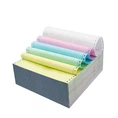
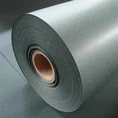
Thermal Paper Labels
Why Choose Us
Reliable Product Quality
As a trusted manufacturer of high-quality paper products in China, we take pride in introducing our latest innovation. We guarantee the highest quality and most competitive prices.
Rich Experience
After more than ten years of development, it has strong technical and perfect product reserves, forming the concept of serving customers. At present, we have 3 coating production lines with an annual output of 10,000 tons.
Environmental Sustainability
At our company, we have a deep commitment to eco-friendly, cost-effective paper production, and our products are where that mission comes to life.
Excellent Customer Service
We are known for their excellent customer service. They are responsive to customer inquiries and concerns, ensuring that their customers have a positive experience.
What is Thermal Paper Labels
Thermal paper labels are labels that are printed on a special type of paper that uses heat to produce an image or text. When heat is applied to the paper surface, the thermal coating changes color to create an imprint on the label. This type of label is commonly used in point-of-sale systems, shipping labels, and in the healthcare industry for patient identification wristbands. Thermal paper labels offer high-quality print resolution, are easy to print and apply, and do not require ink or toner.


Advantages of Thermal Paper Labels
High-Quality Printing
One of the most remarkable advantages of thermal paper labels is their ability to deliver exceptional print quality and clarity. By employing thermal printing technology, these labels produce sharp and durable images and text, ensuring that your labels are professional-looking and easy to read. This feature makes thermal paper labels particularly suitable for barcodes, product labels, shipping labels, and more. With thermal paper labels, you can achieve consistent and legible prints every single time.
Cost-Effective Solution
Thermal paper labels offer substantial cost savings in several ways. Firstly, they eliminate the need for ink or toner cartridges, thereby reducing ongoing maintenance and replacement costs. Since thermal printing relies on heat to create the image, there is no need for expensive consumables. Furthermore, thermal label rolls are often available at affordable prices, particularly when you opt to buy direct thermal labels online. These cost efficiencies make thermal paper labels a budget-friendly choice for businesses of all sizes.
Durability and Longevity
When it comes to durability, thermal paper labels excel. They are designed to withstand various environmental conditions, making them highly resilient. These labels are resistant to smudging, fading, and moisture, which is especially crucial for shipping labels and product labels that may encounter rough handling or exposure to different climates. By utilising thermal barcode labels or thermal adhesive labels, you can trust that your labels will remain intact and readable throughout their lifespan, ensuring the reliability of your labelling system.
Efficient and Fast Printing
Efficiency is a key attribute of thermal paper label printers. These printers are purpose-built for speed and productivity, enabling you to print labels quickly and effortlessly. Whether you need to print a few labels or hundreds of them, thermal printers can handle the task efficiently. The direct thermal printing process eliminates the need for time-consuming ink or toner replacement, reducing downtime and improving overall productivity. This efficiency is particularly valuable for businesses that have high-volume labelling requirements and need to meet tight deadlines.
Customisation and Flexibility
Thermal labels offer a high degree of customisation, allowing you to tailor your labels to suit your specific needs. Whether you require specific label sizes, designs, or branding elements, thermal paper labels can be easily customised to meet your requirements. By ordering direct thermal paper label supplies, you can ensure that your labels align with your brand identity and convey a consistent message to your customers. The ability to create customised direct thermal paper labels empowers you to enhance your product presentation and brand recognition, ultimately contributing to a more memorable and impactful customer experience.
Types of Thermal Paper Labels
Direct Thermal Labels
These labels have a special thermal-sensitive coating on the label material. Printing is accomplished by applying heat directly to the label, causing a chemical reaction that produces the desired image or text. Direct thermal labels are sensitive to heat and can fade or darken over time when exposed to sunlight or high temperatures. They are often used for short-term applications, like shipping labels and receipts.
Thermal Transfer Labels
These labels use a thermal transfer ribbon (a wax or resin-based ink) to print the information onto the label material. The printer applies heat to the ribbon, which transfers the ink onto the label. Thermal transfer labels are more durable and resistant to environmental factors like heat, moisture, and UV exposure. They are suitable for long-lasting labels, such as product labels, asset tags, and labels used in harsh conditions.


Thermal paper labels are made with a special paper that has a thermal coating on one side. This coating is typically made from a mixture of dyes, waxes, and resins. When heat is applied to the thermal paper label, the coating reacts and changes color, creating the image or text on the label. The paper used for thermal paper labels is typically made from wood pulp or recycled paper, and may also contain other additives to help improve its strength, durability, and resistance to moisture or fading.
Application of Thermal Paper Labels
Retail
Retailers rely on thermal paper labels for pricing, product labelling, and inventory management. Thermal barcode labels are particularly popular in retail environments, enabling efficient scanning and tracking of products.
01
Logistics and Shipping
The logistics and shipping industry heavily relies on thermal paper labels for printing shipping labels, tracking labels, and address labels. Thermal labels' durability ensures that crucial information remains legible throughout the shipping process, even in harsh conditions.
02
Healthcare
In the healthcare sector, thermal paper labels are used for various applications such as prescription labels, patient wristbands, laboratory sample labels, and medical equipment labelling. The ability to print clear and accurate information is vital for patient safety and efficient healthcare operations.
03
Manufacturing and Warehousing
Manufacturers and warehouses utilise thermal paper labels for inventory management, asset tracking, and product labelling. The fast printing speed and high-volume capabilities of thermal label printers make them ideal for these industries.
04
Food and Beverage
Thermal paper labels play a crucial role in the food and beverage industry for labelling packaged products, expiration dates, nutritional information, and ingredient lists. The resistance to moisture and smudging is essential in maintaining the integrity of product labels.
05
Components of Thermal Paper Labels
Base Paper
The foundation of the thermal paper labels begins with its base layer, a sheet customized and designed for thermography. This is then coated in a heat-sensitive coating to form the final product. The top layer consists of a special coating that is sensitive to heat. The heat source can be either an electronic thermal printer head or a conventional heating element.
Precoat Layer/ Clay Coating
Adding a precoat layer to your thermal insulation will not only enhance its heat retention but also provide greater smoothness, uniformity, and stability. This second layer is usually made from plain paper stock. However, sometimes clay-coated base papers are also used for improved load capacity and durability under high-speed printing conditions. This substrate provides mechanical strength and rigidity to the thermal paper.
Thermal Layer
Thermal layer technology allows you to create beautiful images with a thermal reaction. When heated, the paper becomes black due to chemicals such as dye, developer, and sensitizer. This method is highly effective in producing exquisite visuals that captivate audiences. This layer is a backing material that provides even more mechanical strength but also serves as a barrier between the medium and external environment, protecting it from moisture or other factors that could otherwise cause smudging. Depending on its intended use, different types of thermal papers may incorporate additional layers for specialized performance characteristics.

How Long Do Thermal Paper Labels Last
Printed labels created using the direct thermal printing method are best suited for short-term applications. They have relatively short lifespans (typically between six to nine months), depending on the type of label material and the application environment. Since the label materials are sensitive to heat, continued exposure to heat and ultraviolet (UV) light will cause the printed image to fade over time.

Characteristics of Thermal Paper Labels
As efficient as thermal labels are, it's vital to understand their characteristics to use them effectively. They are designed to respond to heat, which means they can be affected by their storage environment and the conditions they are exposed to during use. Different thermal labels may also have different sensitivities to heat, resulting in varying print qualities. Understanding these characteristics will enable you to select the right thermal labels for your specific requirements and ensure their proper handling and storage for optimum performance.
How Does Temperature Affect Thermal Paper Labels


Application Temperatures: Consider the Right Adhesive
The temperature of the environment you apply the label in can certainly have an impact on how it sticks and stays in place. Standard label adhesive will stick well when applied in the range between -18°C and room temperature, however you might like to ask us about speciality adhesive if you're planning to label anything that's already frozen. These speciality adhesives can be applied in temperatures down to and including -40°C.
Environmental Temperatures: Consider the Right Printing Method and Substrate
It's also important to consider the temperatures that each label might be exposed to as it's scanned, stored and/or transported over time.
- Heat: Extensive exposure to heat and UV light can fade or discolour the print on heat-reactive direct thermal labels, so if heat will be a factor you might consider using the thermal transfer printing method instead. This method applies wax or resin to the label, and will retain a crisp and clear print. Ribbons range from wax, to wax/resin to resin options, offering a range in durability.
- Cold: There are printing considerations for the other end of the temperature range too. Direct thermal labels are often used for meat packaging and other deli items without any issues, but if the label and item will be stored in deep freeze conditions then you might consider using thermal transfer labels instead.
Thermal labels work best at room temperature. Extreme temperatures—either too cold or too hot—can affect the heat-sensitive material in the labels, potentially leading to poor print quality or unintended darkening. It’s, therefore, crucial to use and store thermal labels at a moderate temperature to maintain their effectiveness and ensure high-quality prints.
How to Get Started Printing Thermal Paper Labels
Step 1: Know Your Printing Methods
While the direct thermal technique applies heat to a thermal-reactive label in order to print, the thermal transfer technique melts a wax/resin substrate from a ribbon onto the label's surface. Though thermal paper labels are available and have a water-resistant coating, direct thermal labels can generally be sensitive to heat, light and moisture. Most label coatings will be resistant to the odd splash, but if you need truly waterproof labels, then thermal transfer synthetic labels will be the most suitable option.
Step 2: Consider Your Substrate and Ribbon
If you're printing thermal paper labels you'll have the choice of using a wax, resin or a combined wax/resin ribbon. While wax provides a cheap and cheerful option for labels that won't require robust handling, a resin combination or full resin ribbon can provide far more durability for handling and waterproofing. Full resin can actually slightly dissolve into poly label stock for a permanent bond, which can be ideal for important applications such as pharmaceutical, medical, chemical and automotive labelling.
Step 3: Consider Your Adhesive Needs
Some situations might call for thermal paper labels that are temporary and removable (say, a price sticker on a pot plant), while others might call for a truly permanent bond (such as chemical or medication labelling). We can also add tamper-proof cuts to temporary stickers, which makes it clear if there's been an attempt to remove or relocate the sticker. Choosing a stronger adhesive will be important when it comes to applying labels to damp, chilled or frozen items. We can also provide labels with specialist adhesives that can withstand more extreme temperatures and conditions.
To ensure the longevity and legibility of thermal paper labels over time, consider the following best practices:
Choose High-Quality Labels:Start by selecting high-quality thermal paper labels. Opt for labels that are manufactured using premium materials and coatings. These labels are more likely to withstand the test of time and maintain their legibility.
Store Labels Properly:Store your label rolls in a cool, dry place away from direct sunlight and extreme temperature fluctuations. Heat and humidity can adversely affect the sensitivity of thermal paper labels and lead to premature fading or darkening.
Protect from UV Exposure:Thermal paper labels are sensitive to UV (ultraviolet) light. Whenever possible, avoid exposing labelled items to direct sunlight or strong UV sources to prevent label fading over time.
Use a Quality Direct Thermal Printer:Ensure that you are using a high-quality direct thermal printer designed for your specific label rolls. Cheap or incompatible printers can result in poor print quality and reduced longevity. Regularly clean and maintain your printer to prevent dust and debris build-up.
Adjust Print Density
Most direct thermal printers allow you to adjust print density. Experiment with the settings to find the right balance between a clear, dark print and label longevity. Avoid setting the print density unnecessarily high, as it can accelerate label fading.
Avoid Abrasion and Scratching
Handle labelled items with care to prevent abrasion and scratching of the labels. When affixing labels to surfaces, ensure that they are fully adhered to prevent edges from lifting, which can lead to damage over time.
Laminate Labels (if necessary)
For labels that need to endure harsh conditions or handling, consider using a label laminator or applying a clear label protector. Laminating can provide an extra layer of protection against abrasion, moisture, and fading.
Regularly Inspect Labels
Periodically inspect labelled items for signs of fading or damage. Replace labels that have become illegible or worn out promptly to maintain accuracy and readability.
Use Quality Label Adhesives
Labels with strong, durable adhesives will stay in place longer. Ensure that the adhesive used on your labels is appropriate for the intended application and environment.
Keep Records
Maintain records of label rolls, printer settings, and environmental conditions to track label performance over time. This information can help you identify any issues and make necessary adjustments.
Problems Caused by Prolonged Exposure of Thermal Paper Labels to Sunlight

Fading
Thermal paper labels will gradually fade when exposed to direct sunlight. This fading can render the labels illegible and compromise the information they convey.

Reduced Legibility
Labels that have faded due to sun exposure may become difficult to read, leading to errors or confusion in labelling applications.
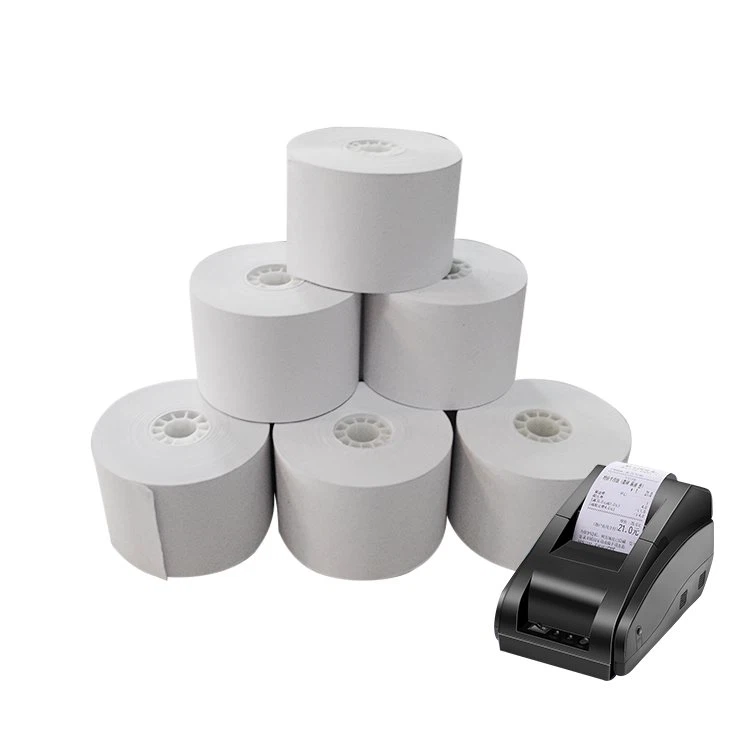
Shortened Lifespan
Sunlight can accelerate the thermal paper's chemical reaction, causing the labels to darken or turn black prematurely. This shortens the lifespan of the labels and reduces their overall effectiveness.

Inaccurate Information
In situations where accurate information is critical, such as in logistics, healthcare, or product labelling, using labels that fade or become illegible due to sunlight can have serious consequences.
Certifications


Our Factory
Shandong Sishui Deyi Industry and Trade Co., Ltd. was established in July 2006. After more than ten years of development, it has strong technical and perfect product reserves, forming the concept of serving customers. Customer first, quality first. At present, we have 3 coating production lines with an annual output of 10,000 tons. The company also produces and processes cash register paper and multifunctional office paper. About 200 containers are exported every year, and the products include roll carbon-free paper, carbon-free cash register paper, thermal cash register paper, A3/A4 multifunctional office paper, etc.

Ultimate FAQ Guide to Thermal Paper Labels
We're professional thermal paper labels manufacturers and suppliers in China, specialized in providing high quality products with low price. We warmly welcome you to buy cheap thermal paper labels in stock here from our factory.
Color Thermal Label, roll thermal, a4 thermal sticker paper roll