


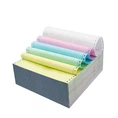
Thermal Paper
Why Choose Us
Reliable Product Quality
As a trusted manufacturer of high-quality paper products in China, we take pride in introducing our latest innovation. We guarantee the highest quality and most competitive prices.
Rich Experience
After more than ten years of development, it has strong technical and perfect product reserves, forming the concept of serving customers. At present, we have 3 coating production lines with an annual output of 10,000 tons.
Environmental Sustainability
At our company, we have a deep commitment to eco-friendly, cost-effective paper production, and our products are where that mission comes to life.
Excellent Customer Service
We are known for their excellent customer service. They are responsive to customer inquiries and concerns, ensuring that their customers have a positive experience.
What is Thermal Paper
Thermal paper is a special type of paper that changes color when exposed to heat, usually through a thermal printer. It contains a chemical coating that reacts to heat by producing color, which is used in applications such as printing receipts and labels. This type of paper is commonly used in retail stores, restaurants, and other businesses that require printing of receipts and other small documents.


Advantages of Thermal Paper
Accurate
A huge benefit of thermal paper is that it allows for more precise printing than regular ink. This is why hospitals, lottery agencies and anyone who needs real precision are turning to thermal paper printing services.
Low Maintenance, Lasts Longer
A big advantage of using thermal paper rolls is that there is a lot less maintenance involved, as you don't have ink cartridges to replace. Thermal printing works by using heat to create a chemical reaction, so all you need to do is keep the printer head clean and clear, wiping everything down regularly. Thermal printers don't need a lot of moving parts, which makes them simpler to run and longer lasting than ink printers. A decent quality thermal printer can last for a remarkable length of time, even under the pressure of a constant heavy workload.
Fast
For people and businesses that need to be able to move quickly, thermal paper printing is a fantastic option, as it is extremely fast. When you think about all the places you go in a week where thermal printing is used, it can mean you're saving quite a significant amount of time by the end of an average week.
Quiet
If you have to do a lot of printing at your business, it can get a little maddening having to listen to a noisy printer all day. Thermal printers are a virtually silent form of printer, so you won't have to go home with that searing headache over and over again.
Won't Jam
Using thermal rolls will save you a lot of time and hassle, as it's far less likely to jam than ordinary paper. This will take the frustration out of doing a large printing job, as paper jams can quickly drive a person insane.
Allows For Mobile Printing
Before thermal printing, it wasn't possible to have light, high-quality and affordable mobile printing units, as they were too heavy, messy or were to expensive. Thanks to thermal paper, however, mobile units are now widely used across retail and hospitality sectors, and have allowed for better customer service and more flexible time management.
Types of Thermal Paper
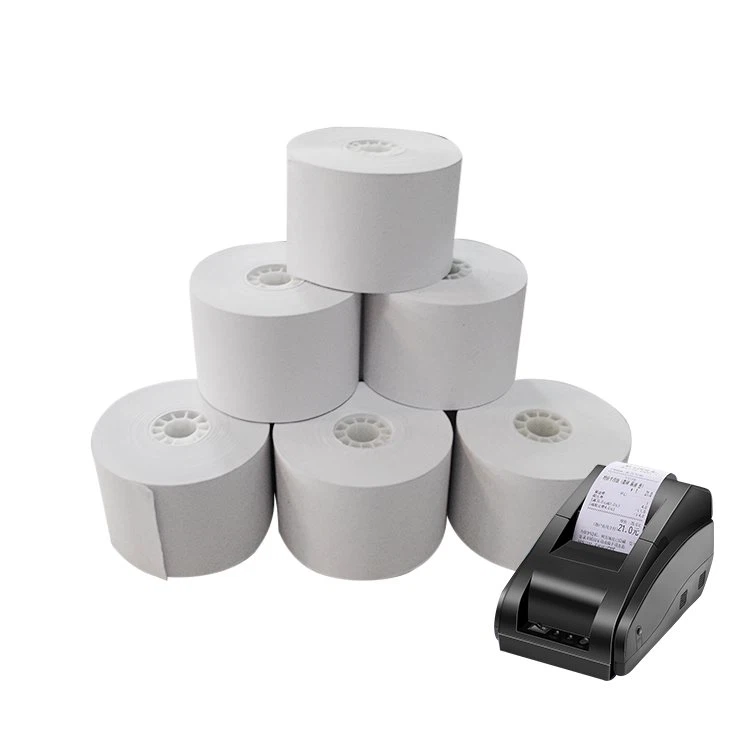


Standard Thermal Paper
This thermal printer paper produces images with crisp black text and lines on a white background. It is suitable for general-purpose applications such as printing receipts, tickets, labels, and tags.
Preprinted Thermal Paper
This type of thermal paper features a preprinted design, logo, or pattern. It is often used for printing tickets, labels, and tags with unique designs or branding.
Top-Coated Thermal Paper
Bonded thermal paper has a special coating that helps protect the printed image from fading, smudging, and other damage due to moisture, oils, and heat exposure. It is often used in applications where durability is important such as shipping documents or medical records.
Carbonless Paper
Also known as NCR (No Carbon Required) paper, this printer paper uses a chemical reaction between two layers instead of carbon to produce images on the paper surface. It is commonly used for printing multi-part forms and documents.
Self-Adhesive Thermal Paper
This thermal printer paper has an adhesive backing that keeps the document in place on any surface. It is often used for printing receipts and labels that need to be affixed to packages or other items. In addition, the adhesive backing helps protect the printed image from fading, smudging, or tearing.
Application of Thermal Paper
Tickets
Whether it's for a movie or a concert, most tickets are printed on thermal paper. The process is quick, which is especially beneficial when dealing with long lines in the box office.
Receipts
Thermal paper is widely used for receipts, including at grocery stores, retail stores, gas stations, and restaurants. The receipts print quickly and are easy to read because of the crisp printing.
Labels
In logistics and shipping, thermal paper is often used to create shipping labels, barcodes, and product labels.
Medical Imaging
In the healthcare industry, thermal paper is used in certain kinds of medical devices, such as ultrasound machines, ECG machines, and patient monitoring systems to produce instant reports and images.
What Is the Composition of Thermal Paper
The thermal paper composition has several layers, each playing an important role in the overall performance. Crafting thermal paper involves a combination of core components: Base Paper, as well as Clay Coating and Primer (glue) to act as an adhesive. Last but not least, the entire process is sealed with an effective thermal coating

Base Paper
The foundation of the thermal paper begins with its base layer, a sheet customized and designed for thermography. This is then coated in a heat-sensitive coating to form the final product. The top layer consists of a special coating that is sensitive to heat. The heat source can be either an electronic thermal printer head or a conventional heating element.
Precoat layer/ Clay Coating
Adding a precoat layer to your thermal insulation will not only enhance its heat retention but also provide greater smoothness, uniformity, and stability. This second layer is usually made from plain paper stock. However, sometimes clay-coated base papers are also used for improved load capacity and durability under high-speed printing conditions. This substrate provides mechanical strength and rigidity to the thermal paper.
Thermal Layer
Thermal layer technology allows you to create beautiful images with a thermal reaction. When heated, the paper becomes black due to chemicals such as dye, developer, and sensitizer. This method is highly effective in producing exquisite visuals that captivate audiences. This layer is a backing material that provides even more mechanical strength but also serves as a barrier between the medium and external environment, protecting it from moisture or other factors that could otherwise cause smudging. Depending on its intended use, different types of thermal papers may incorporate additional layers for specialized performance characteristics.
Before understanding where you should not store thermal receipt paper, it is first important to know how thermal paper works. This will provide a bit more context into where is and is not an optimal location for storage. As the name would suggest, thermal paper functions using heat. The paper has a special chemical coating. It is this coating that gives it a slick appearance. This coating interacts with heat to create an image on paper. Thermal printer heads are able to very specifically apply high concentrations of heat to create detailed images. However, this paper can also interact with other heat sources.

DIY Labels and Stickers:Thermal paper can make fantastic labels and stickers. Use them to organize your home, office, or craft supplies. The thermal printing process creates a clean and sharp look for your labels.
Grocery Shopping Lists:Create reusable grocery lists on thermal paper. You can easily wipe them clean once you've completed your shopping. An eco-friendly alternative to traditional paper lists.
Kids' Art Paper:Kids love doodling and drawing. Hand them a roll of thermal paper and watch their creativity unfold. The drawings will disappear after some time, allowing them to create over and over again.
Message Boards:Use thermal paper to create temporary message boards or reminders in your home or office. Write your notes, and when they're no longer needed, erase them with a swipe.
Personal Journaling
Write your daily thoughts and reflections on thermal paper. Over time, the thermal paper creates a unique archive of your thoughts that fade away, making it a privacy-friendly journal.
Puzzle Games
Craft your own puzzle games on thermal paper. Draw mazes, word searches, or Sudoku puzzles and enjoy solving them. Wipe it clean for the next challenge.
Label Plants and Herbs
Label your indoor or outdoor plants with thermal paper. As you can change the labels easily, it's perfect for those who frequently reorganize their garden.
Travel Diary
Document your travels with a thermal paper diary. Jot down your daily experiences and store them as a scroll of memories.
Party Decorations
Use thermal paper for party decorations like banners and signage. It's cost-effective and allows for easy customization.
Classroom Activities
Teachers can use thermal paper for interactive lessons. Write math problems, quizzes, or vocabulary words, and let students answer with the satisfaction of erasing their answers when done.
How to Choose Thermal Paper
Moisture: If the document is likely to be exposed to moisture due to environmental factors or storage in a damp location, it is recommended to use a paper with additional moisture resistance or synthetic material to prevent the document from deteriorating and becoming more illegible.
Heat: It is advisable to opt for heat-resistant materials if there is a risk of exposure to extreme heat to prevent paper documents from turning black and becoming unreadable due to the chemicals in the paper reacting. For instance, leaving documents in a vehicle during peak summer temperatures, which can exceed 150 degrees, can trigger this reaction. Therefore, it is recommended to use thermal materials that are specially designed to withstand higher temperatures.
Coating: Some thermal papers do not have a topcoat, which is an additional layer for protection against certain environmental factors. However, papers without a topcoat are suitable for applications that do not require high resistance. It should be noted that all thermal papers have a base coat and a thermal coat.
Thickness: Customers often perceive thicker materials as more durable and of higher quality. However, thicker materials also mean fewer sheets of paper per roll, resulting in the need for more roll changes when printing documents.
Smoothness: To ensure that your thermal roll paper is suitable for printing, it should be smooth on both sides. If the paper is not smooth, it may produce dust during printing, which could damage the printer's header.
Durability: Choosing a durable storage solution that meets your archiving needs is important to ensure that your documents last longer and remain protected from environmental factors such as heat and moisture. Many people need to pay more attention to the importance of storage when it comes to the lifespan of a document. Make sure to select a material that is rated to meet your archiving requirements.
Reason Analysis: Sitting for too long, heavy objects are pressed for a long time,pat the surface of the leather cloth with your hands and stretch on both sides
Where Not to Store Thermal Paper
01
Near a Window
Sunlight and thermal paper do not get along. The heat from the sun can cause the paper to discolor. Meanwhile, UV rays can turn thermal paper black relatively quickly. This is one of the reasons why it is important to store thermal paper in dark places like cabinets or other storage to maximize their shelf life.
02
In Your Car
Have you ever purchased business supplies and left them in your car a few days before bringing them into the office? We all forget things from time to time. While this is fine with many types of business supplies, it is a very bad idea for thermal paper. During warm weather, your car will often get hot enough that the paper can be destroyed. Always store thermal paper in an area with a maximum temperature of 77 degrees.
03
Next to Adhesives or Solvents
While you can store thermal paper next to most other business supplies, it is best to create some space between them and these two products. Solvents such as alcohol and cleaning fluids can penetrate the thermal paper and greatly diminish the colors. Meanwhile, adhesives that get in contact with a thermal paper can prevent it from unwinding in the machine, causing many problems.


Why Does Thermal Paper Fade?
Thermal printer paper is fabricated with a characteristic chemical coating that reacts with heat to imprint images and text. While heat is used in printing, it can also be detrimental. If the thermal paper is left exposed, it can react with UV or environmental heat, causing written text to fade. This is similar to what happens if you place thermally printed receipts under a hot iron plate; after about 10 seconds, heat from the iron turns the paper black. Other damaging agents include humidity and oil. But don't fret. Much of this can be reversed
How to identify thermal paper involves subjecting the paper to high heat temperatures. The better the quality, the more resistant to heat the thermal paper is. Feel the thermal paper; it is good quality if smooth to the touch. Lastly, you can test thermal paper quality by checking its thickness. The thicker the paper, the better the quality, and the higher its chances of withstanding everyday wear and tear.

How to Make Thermal Paper Not Fade Away

Preserving the clarity and vibrancy of your thermal paper printouts is achievable by simply adhering to certain storage conditions. This includes steering clear from direct sunlight, UV rays or fluorescent lights as well as moderating temperature and humidity levels for optimal preservation. Moreover, ensure that you place them in airtight containers to eliminate particles like dust from entering the stored paper rolls and damaging their surface coatings.
Temperature and Humidity Levels
Make sure the temperature and humidity levels are optimal for storage. The printing receipt warehouses should be stored at temperatures between 20-25°C (68-77°F) and relative humidity between 30%-50%. The warmer and more humid the environment, the faster the thermal coating will degrade. Therefore, keeping these conditions as stable as possible is essential for the long-term storage of POS thermal paper.
Avoid Direct Sunlight
You need to avoid direct sunlight or any UV light exposure. Thermal printer paper can degrade quickly when exposed to UV light, so make sure you store it in a dark and cool place to ensure its longevity. Also, keep away from fluorescent lights, which can cause fading and discoloration over time.
Keep Thermal Paper Away From Moisture
Moisture is the enemy of thermal paper as it will cause damage over time and can even render it unusable if not taken care of properly. To avoid this, ensure the room where you store your thermal paper has good air circulation and low humidity levels (less than 30%).
Store In An Airtight Container
It is best to keep it in an airtight container to prevent moisture and dust from entering the thermal paper. This will help preserve its chemical coating and prevent contamination from affecting its quality.
Check The Expiration Date
Every thermal paper roll has a manufacturer’s recommended expiration date printed on the package, so check this before storing your paper rolls for long-term use. If you need to store them for longer than the recommended time frame, consider purchasing sealed packages with extended shelf life.
Scratch with Your Fingernail
Scratching with your fingernail is the easiest way to determine whether a paper is thermal. Since thermal paper has a chemical coating on the surface, it generates heat when you scratch it. As a result of the heat, the paper will produce black marks. To determine whether you have genuine thermal paper, it would help to try the scratch test on both sides of the paper. If none turn black, then you most likely have regular paper. On the other hand, if your scratching results in black marks, that is thermal paper.
Observe and Feel the Paper Surface
Observing or feeling the paper surface is another way to determine whether a paper is thermal or regular. Thermal paper typically has a shinier and smoother surface than other paper types like carbonless and bond paper. However, this is not always a foolproof way to determine whether a paper is thermal. That’s because some types of bond paper are just as smooth and shiny.
Fire Roasting
Another neat trick is heating the back of the thermal paper. Use a lighter to roast the back lightly, and if it changes color and gradually fades to its surroundings, it is thermal paper.
Test the Paper on Thermal Printer
Using a thermal printer is another great way to identify thermal paper. Thermal printers produce text or images on thermal paper without using ribbons. Using regular paper in a thermal printer will not produce any results.
Certifications


Our Factory
Shandong Sishui Deyi Industry and Trade Co., Ltd. was established in July 2006. After more than ten years of development, it has strong technical and perfect product reserves, forming the concept of serving customers. Customer first, quality first. At present, we have 3 coating production lines with an annual output of 10,000 tons. The company also produces and processes cash register paper and multifunctional office paper. About 200 containers are exported every year, and the products include roll carbon-free paper, carbon-free cash register paper, thermal cash register paper, A3/A4 multifunctional office paper, etc.

Ultimate FAQ Guide to Thermal Paper
We're professional thermal paper manufacturers and suppliers in China, specialized in providing high quality products with low price. We warmly welcome you to buy cheap thermal paper in stock here from our factory.
sticker paper 100 sheets, thermal paper roll 55mm, thermal printer paper a4